


 Business License

What Is The Best Paper Tube Making Machine For Paper Core Production?
If you run a converting plant, packaging factory, textile mill, tape or stretch film business, stable and high-quality paper cores are the silent backbone of your finished goods. Poorly formed paper cores with uneven walls, out-of-round shapes, rough cut ends or inconsistent strength lead to product jams, winding defects, waste rolls and complaints from your downstream customers. The question every production manager asks sooner or later is simple: what is the best paper tube making machine for paper core production? The answer is not a one-size-fits-all model. The best paper core machine balances production speed, precision, automation level, material compatibility, operating cost and long-term reliability for your specific output goals. For most B2B manufacturers focused on consistent industrial paper cores, the fully automatic CNC spiral winding paper tube machine stands out as the leading choice, while semi-automatic and parallel winding machines serve targeted niche needs.
Paper cores are everywhere in modern manufacturing. They act as winding carriers for adhesive tape, stretch film, BOPP film, aluminum foil, toilet rolls, kitchen towels, textile yarns, label stock and shipping mailing tubes. Each application sets different mechanical requirements. Light-duty tissue cores demand smooth surfaces and low cost. Heavy-duty industrial cores for film and textile winding need high crush resistance, uniform wall thickness and tight roundness to withstand sustained tension during high-speed slitting and rewinding. This is why machine selection must start with your product specification list rather than picking the fastest or cheapest unit on the market.
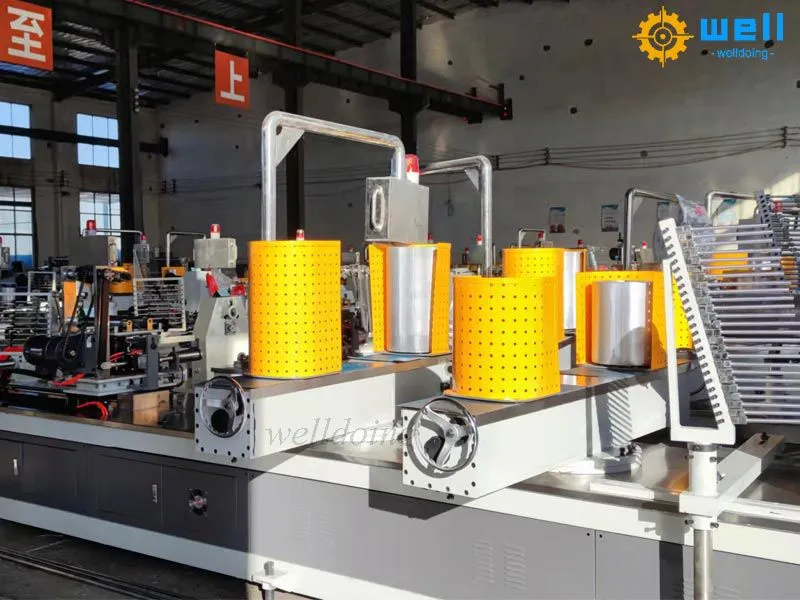
Two mainstream machine types dominate paper core manufacturing: spiral winding paper tube machines and parallel winding paper tube machines. Spiral winding equipment is the most widely adopted solution for general paper core production. It feeds multiple strips of kraft paper at an angle onto a rotating mandrel, applies controlled adhesive, and overlaps layers continuously to build the tube wall. This layered spiral structure delivers excellent compressive strength and uniform roundness, which is critical for film, tape and textile cores. Parallel winding machines roll wide paper sheets straight along the mandrel axis. They are faster for thin, short tubes such as firework tubes and small packaging cores, yet they struggle to match the structural strength and diameter flexibility of spiral winding lines for heavy industrial cores. For most converters supplying multiple industries, spiral winding technology remains the preferred foundation.
Within spiral winding machines, there are three tiers: semi-automatic, PLC automatic and CNC servo automatic models. Semi-automatic paper tube machines are the entry-level option for small startups and low-volume workshops. They have lower upfront investment, simpler operation and smaller footprint. Operators manually feed paper webs and adjust glue volume or cutting positions. They work well if you only produce one or two core sizes and can accept slightly higher defect rates and limited daily output. The downside is heavy reliance on operator skill. Tension drift, uneven glue application and cutting error become common pain points as order volumes grow. Semi-automatic machines make sense for new factories testing the paper core market, but they are rarely the best long-term choice for stable commercial supply.
PLC automatic spiral paper tube machines represent a solid mid-range upgrade. They integrate automatic unwinding, automatic gluing, continuous winding and fixed-length cutting with touchscreen parameter setup. Operators can save basic recipes for common core sizes, and the machine maintains steady tension through closed-loop control. These models strike a good balance between price and performance for medium-volume factories producing standard tape cores and tissue cores. However, traditional PLC machines still use fixed mechanical transmission. When switching frequently between inner diameters, wall thicknesses and paper grades, repeated mechanical adjustments take time, and precision can drift after months of heavy operation.
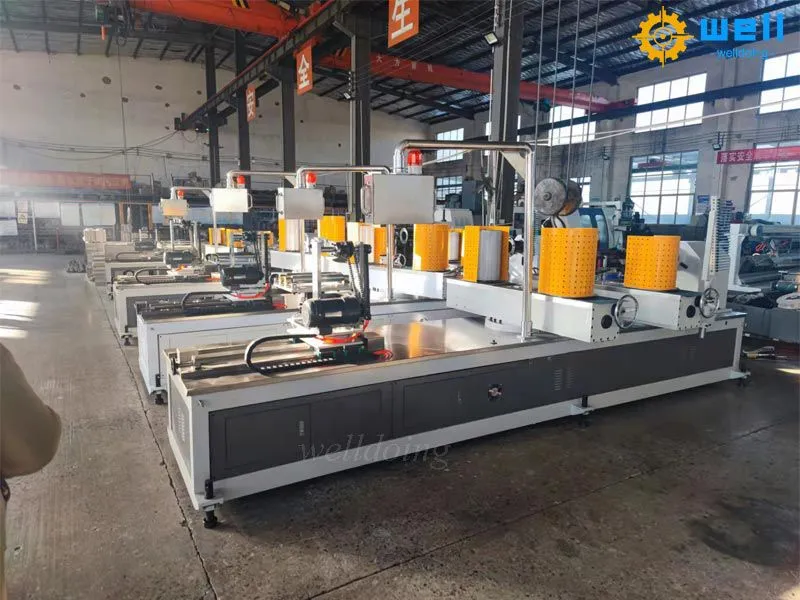
The best all-round paper tube making machine for professional paper core production is the CNC servo-driven automatic spiral paper tube machine. This upgraded system replaces ordinary frequency conversion drives with synchronized servo motors and digital tension sensors. Every motion, from paper unwinding, glue coating, winding rotation and flying cutting is digitally synchronized. Operators call up pre-stored production recipes on the HMI screen, and the machine automatically adjusts mandrel speed, paper tension, glue flow and cutting position without manual mechanical tuning. Cutting accuracy can reach ±0.5 mm, which eliminates uneven end faces that ruin high-speed film rewinding. The heavy welded steel frame with vibration-damping design keeps stable roundness even running continuously at speeds up to 40–60 meters per minute. It supports a wide specification range: inner diameter commonly from 30 mm to 200 mm, wall thickness from 1 mm to 15 mm, and finished tube length up to 5 meters, with custom mandrels available for special sizes. It works smoothly with kraft paper, recycled paper and composite paper, adapting to light tissue cores and high-strength industrial cores in the same production line.
Beyond core mechanical performance, the best paper tube making machine must include practical auxiliary functions that reduce downtime and waste. A precision glue control system avoids over-gluing that causes sticky cores and under-gluing that leads to delamination. Automatic paper splicing allows reel change without stopping production, a huge gain for continuous 24-hour shifts. Safety protective covers, emergency stop sensors and overload protection reduce workplace risks. Optional add-ons include automatic finished tube sorting, dust removal units and online length inspection modules. These features cut labor demand down to one or two operators per line, drastically lowering per-unit labor cost compared to manual or semi-automatic workflows.
Before confirming your machine purchase, evaluate five decisive factors to avoid mismatched investment. First, clarify your core product mix. If you mainly supply heavy-duty film and textile cores, prioritize CNC servo spiral equipment. If you only make short, thin specialty tubes, a parallel winding machine may be adequate. Second, calculate your required daily output and target production speed. Buying a high-speed machine for low demand wastes capital and floor space; buying a slow machine for bulk orders creates delivery bottlenecks. Third, check material compatibility. Recycled paper has different stiffness and tension characteristics than virgin kraft paper, and your machine’s tension system must handle your actual paper stock. Fourth, verify after-sales support. A paper tube machine is a long-term production asset. Reliable manufacturers provide installation guidance, operator training, spare parts inventory and remote troubleshooting support. Fifth, compare total operating cost instead of only the machine price. Energy consumption, glue waste, paper scrap rate and maintenance frequency all shape your profit margin over years of operation.
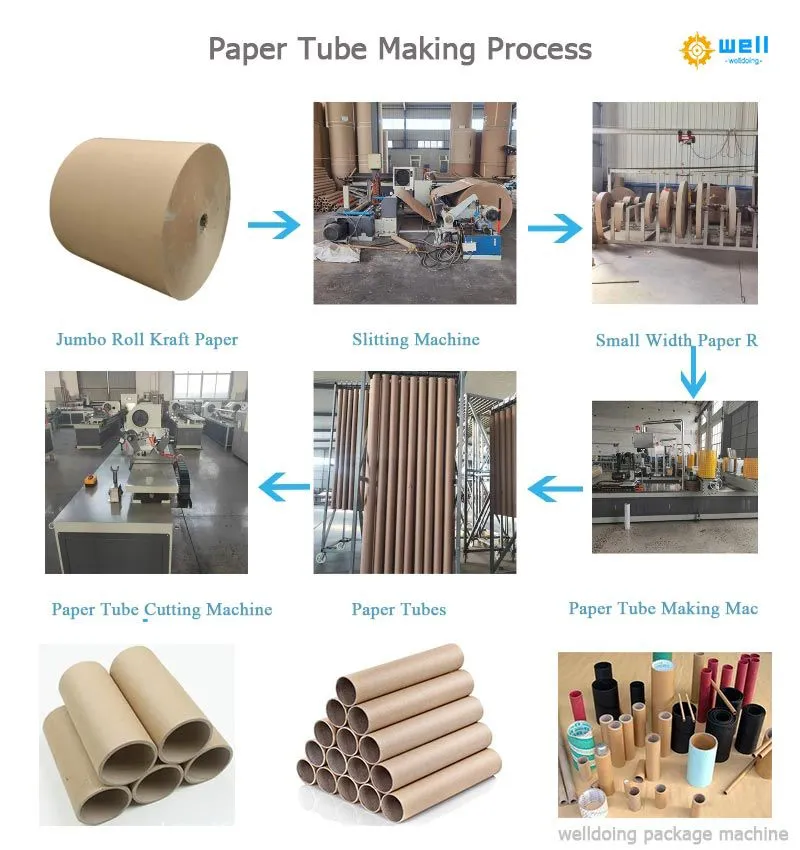
Many buyers make the mistake of chasing the lowest initial price. A cheap machine may save you money at checkout, but unstable quality, frequent breakdowns, high scrap rates and limited after-sales support quickly erase savings. The best paper tube making machine delivers consistent core quality, high uptime, flexible size changeover and predictable operating costs. It helps you win repeat orders by meeting strict tolerance requirements from film converters, tape manufacturers and textile factories. In today’s green packaging trend, efficient paper core equipment also supports circular economy goals by maximizing the use of recycled paper raw materials.
To sum up, there is no universal “best” paper tube making machine for every factory. For small-scale low-volume production, a cost-effective semi-automatic spiral machine is suitable. For stable medium-volume production of standard cores, a standard PLC automatic spiral machine offers reliable returns. For professional paper core manufacturers with mixed specifications, frequent size changeovers and high tolerance requirements, the CNC servo automatic spiral paper tube machine is the optimal solution. It combines high speed, outstanding dimensional precision, flexible parameter management and low labor input, making it the top recommendation for B2B paper core production. When you select your machine, align its capability closely with your product portfolio, capacity targets and quality standards. The right paper tube machine will not only produce paper cores; it will become a reliable engine that improves your product competitiveness and supports steady business growth for years ahead.
Recently Posted
-
Paper Core Making Machine | High Speed Automatic Spiral Paper Tube Production Line
October 27, 2026If you run a packaging, converting, tape, textile or plastic film factory, stable, low-cost paper core supply directly decides you Read More
-
Why choose automatic paper edge protector machine for cargo protection?
October 26, 2026Cargo damage during transit, stacking and storage is a persistent headache for manufacturers, exporters and logistics companies. D Read More
-
Paper Edge Protector Machine: Upgrade Your Green Corner Board Production For Stable, Low-Cost Packaging Supply
October 23, 2026As global packaging buyers push harder for plastic-free, recyclable protective materials, paper edge protectors (also known as pap Read More
-
High Speed Partition Assembly Machine for Corrugated Partition Inserting
October 22, 2026For corrugated packaging plants, carton factories and contract packagers, reliable, fast and consistent partition assembly is ofte Read More

Contact Us
Recommended Products
-
 Chain Feed Carton Box Printing Slotting MachineUS$ 5000 - 100000MOQ: 1 Set
-
Chain Feed Type Printer Slotter & Die CutterUS$ 5000 - 100000MOQ: 1 Set
-
Corrugated Chain Feed Printing Die Cutting SlotterUS$ 5000 - 100000MOQ: 1 Set
-
Semi-Auto Chain Feed Carton Printer Slotter Die CutterUS$ 5000 - 100000MOQ: 1 Set
-
Chain Feeding Printing Slotting Die Cutting MachineUS$ 5000 - 100000MOQ: 1 Set


-
Chain Feed Flexo Printer Slotter Die CutterUS$ 5000 - 100000MOQ: 1 Set
-
Automatic Folding Gluing Stitcher for Carton PackagingUS$ 3000 - 300000MOQ: 1 Set
-
Industrial Folder Gluer Stitcher for Box FormingUS$ 3000 - 300000MOQ: 1 Set
-
Corrugated Box Folder Gluer Stitcher With Stable PerformanceUS$ 3000 - 300000MOQ: 1 Set
-
High Speed Folding Gluing Stitching Machine for CartonsUS$ 3000 - 300000MOQ: 1 Set


-
Automatic Folder Gluer Stitcher for Packaging ProductionUS$ 3000 - 300000MOQ: 1 Set
-
Carton Folder Gluer Stitcher for Corrugated Box MakingUS$ 3000 - 300000MOQ: 1 Set
-
Heavy Duty Paper Core Tube MachineUS$ 5000 - 30000MOQ: 1 Set
-
PLC Control Paper Core Making MachineUS$ 5000 - 30000MOQ: 1 Set
-
Custom Size Paper Core Production MachineUS$ 5000 - 30000MOQ: 1 Set


-
Small Paper Core Making MachineUS$ 5000 - 30000MOQ: 1 Set
-
Industrial Paper Core Winding MachineUS$ 5000 - 30000MOQ: 1 Set
-
High Speed Spiral Paper Core MachineUS$ 5000 - 30000MOQ: 1 Set
-
Box Making Carton Printing Die Cutting SlotterUS$ 50000 - 200000MOQ: 1 Set
-
Servo Carton Printing Die Cutting Slotting MachineUS$ 50000 - 200000MOQ: 1 Set


