


 Business License

How Paper Edge Protector Machine Reduces Pallet Cargo Damage In Export Shipping
For exporters, ocean freight and intermodal logistics carry hidden risks that can turn a profitable shipment into costly claims. Palletized goods pass through container loading, port stacking, truck transfers, warehouse storage and repeated forklift handling before reaching overseas buyers. Corner dents, strap cuts, crushed carton edges, load shifting and collapsed pallet stacks are among the most frequent causes of rejected cargo, chargebacks and damaged brand reputation. If you are a packaging converter supplying angle boards and corner guards, or an export manufacturer managing your own protective packaging, a reliable paper edge protector machine is not just production equipment — it is your frontline defence against preventable pallet cargo damage in global shipping.
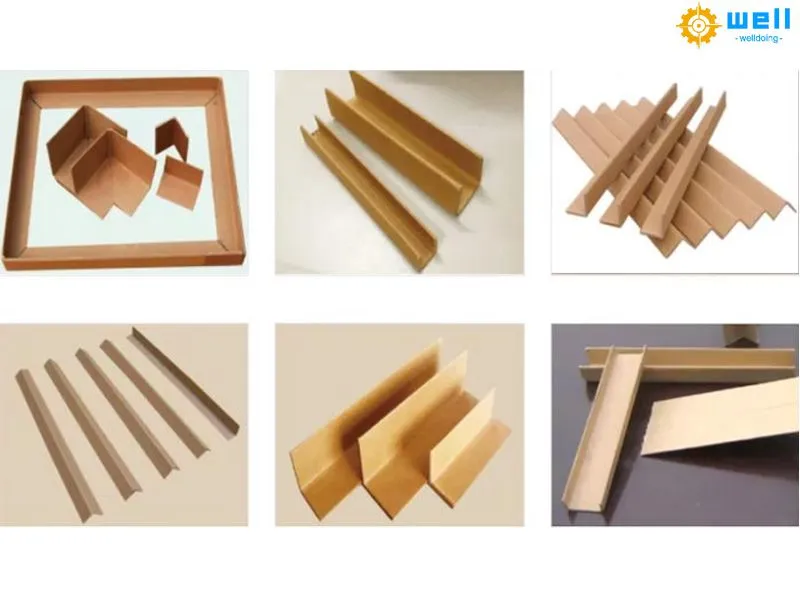
Paper edge protectors, also known as angle boards, corner boards or L-shaped edge guards, are laminated kraft paper profiles formed into rigid 90-degree strips. They fit onto pallet corners, carton edges and exposed product rims to distribute concentrated pressure, buffer strapping tension and reinforce the whole unit load. The protective effect only works when every edge protector has consistent bonding strength, uniform thickness, stable right-angle geometry and reliable compression resistance. That is where the quality gap appears: outsourced edge protectors often suffer from uneven glue lamination, soft layers, irregular lengths and weak crush performance. A single weak corner board can fail under stacking weight, triggering local deformation that spreads across the whole pallet. Investing in an automatic paper edge protector machine lets you produce edge protectors with controlled, repeatable quality tailored exactly to your export cargo’s weight, packing style and transit conditions.
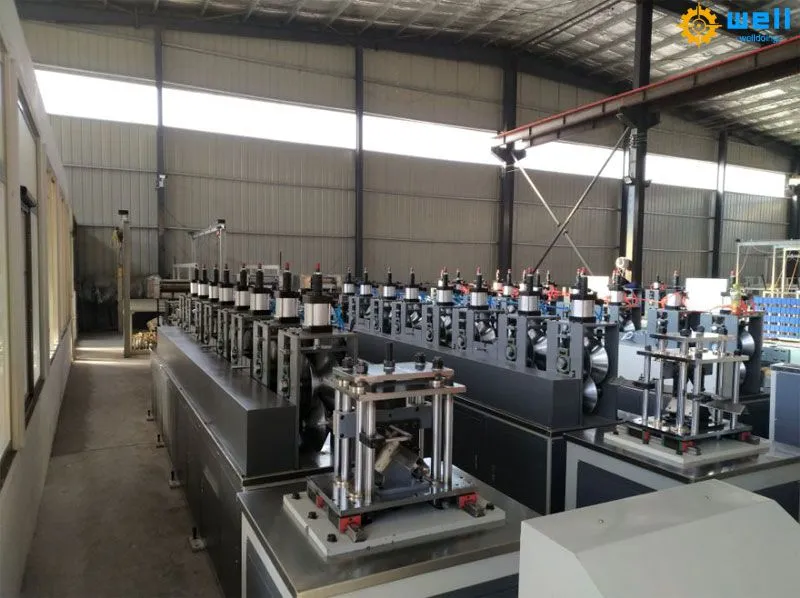
Export shipping creates far harsher load stress than domestic transport. Inside sealed containers, pallets are stacked high for weeks. Vertical compression from upper layers concentrates on the four corners of every pallet. Without edge protectors, carton corners bear the full load and quickly crush inward. Even when you use plastic or steel strapping to tighten the pallet, high strap tension cuts directly into carton edges, leaving permanent indentations, tears and broken packaging. This is one of the top complaints from importers of furniture, ceramic tiles, metal profiles, building materials, home appliances and printed cartons. Well-made paper edge protectors sit between strapping and cargo, spreading strap tension across a wider surface and eliminating cut-in damage. A precision paper edge protector machine builds the rigid laminated structure required to absorb this tension without bending, splitting or delaminating mid-shipment.
Load stability is another critical pain point for ocean shipments. Vibration during sea transit causes packages to shift and slide on pallets. Shifting loads lean, rub against container walls and collide with neighbouring cargo. Many exporters overwrap pallets with stretch film to hold goods tight, but stretch film alone cannot stop corner deformation or stop sharp strapping from damaging outer packaging. When paired with stretch wrap and strapping, uniform edge protectors lock the pallet’s outer dimension. They keep every corner square, restrict sideways movement and maintain a rigid outer frame for the whole unit load. This works only when all edge protectors have matching hardness and straightness. A low-quality edge protector made with inconsistent forming will twist under tension, letting the pallet skew gradually. Modern paper edge protector machine models use servo forming heads, synchronized pressing rollers and closed-loop glue systems to guarantee straight, dimensionally stable angle boards from the first metre to the last.
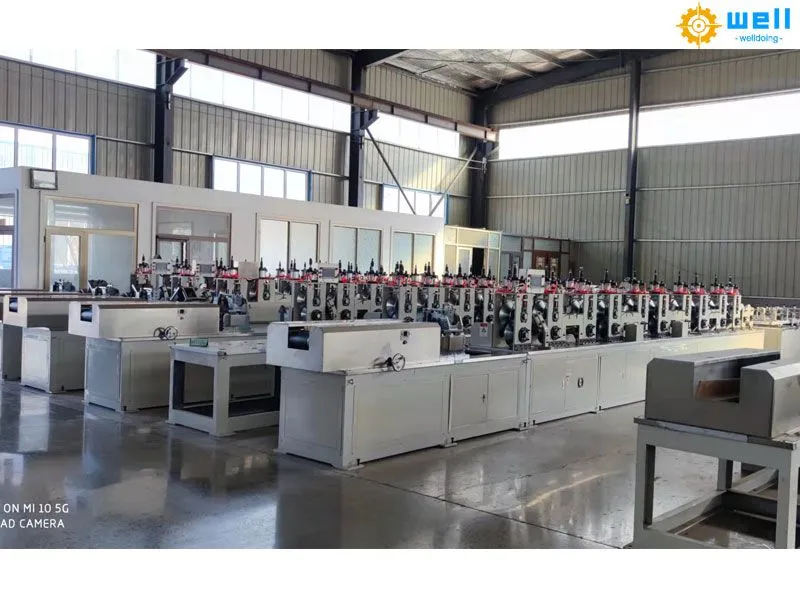
Moisture and humidity fluctuation is a silent threat unique to export shipping. Container rain, damp port storage and temperature swings can soften poorly laminated edge protectors. Cheap corner boards with incomplete glue bonding absorb moisture quickly, lose stiffness and fail to support stacked weight. Advanced paper edge protector machine designs support adjustable glue coating and controlled lamination. You can tune glue penetration and layer density to manufacture standard or moisture-resistant edge protectors for high-humidity sea routes. Consistent glue application prevents dry spots that turn into water entry points. When edge protectors retain their rigidity in humid environments, they continue supporting pallet loads and protecting cargo corners until the container arrives at the destination port. This directly cuts the rate of hidden damage that only appears after the container door is opened overseas.
Many packaging converters underestimate how machine capability shapes the final protection performance of edge protectors. Budget paper edge protector machine versions rely on manual gap adjustment, open glue troughs and basic cutting mechanisms. They struggle to maintain consistent coat weight, lamination pressure and cut length when running long production batches. The resulting edge protectors mix soft, weak pieces with rigid ones. When these mixed-quality corner boards go onto export pallets, failure becomes random and hard to trace. Your customer may receive ten perfect shipments and then one rejected batch, with no obvious root cause. Upgraded automatic paper edge protector machine systems store production recipes on the HMI. You can save parameters for light-duty carton protection, heavy-duty stone and metal cargo, long profiles and short corner pieces. Changeovers take minutes instead of hours, and every batch holds the same crush strength, thickness and dimensional tolerance. That consistency is what makes pallet protection predictable for long export supply chains.
Beyond reducing physical cargo damage, stable in-house production with a paper edge protector machine improves your export compliance and buyer appeal. European and North American importers increasingly require plastic-free, recyclable packaging. Paper edge protectors made from recycled kraft paper are fully recyclable and leave no plastic waste, unlike foam corner guards or custom plastic protectors. They are lightweight too, adding almost no extra freight weight compared with bulky wooden bracing. By producing edge protectors on your own paper edge protector machine, you control raw material grades, adjust profiles to meet buyer packaging specifications and print custom markings when needed. You can supply certified eco-friendly corner boards with stable quality data for buyer audits, which helps you win repeat export contracts and satisfy sustainable procurement rules.
The financial impact of cutting pallet damage stretches across every part of your export business. Damaged cargo means lost product, expensive return shipping, emergency replacement orders and penalty clauses in sales contracts. It also damages trust: overseas buyers will switch suppliers if they repeatedly receive goods with scratched, crushed or torn packaging. Running your own paper edge protector machine eliminates delays and quality uncertainty from third-party edge protector suppliers. You can ramp up production ahead of peak shipping seasons, adjust sizes at short notice and run small custom batches for special export orders. Less damage means fewer inspection failures at destination, fewer customs hold-ups and more on-time, clean deliveries. Many exporters report measurable drops in damage claims once they switch to consistently manufactured angle boards from an automatic paper edge protector machine.
Even with the best paper edge protector machine, correct matching between edge protector specification and cargo type matters. Light carton shipments work well with thin, standard L-profile edge protectors. Heavy stone, steel and timber exports need thicker, high-compression angle boards made with extra kraft layers. Operators should regularly check glue circulation, roller pressure and cutting precision to keep quality steady. Pairing well-made edge protectors with proper palletizing rules — uniform strapping tension, full stretch wrapping and balanced load layout — maximises damage reduction. The machine creates the protective component, but disciplined packaging procedures unlock its full value for sea freight.
For packaging converters and export manufacturers, the core value of a paper edge protector machine extends far beyond turning kraft paper into angle boards. It gives you control over the component that absorbs the most dangerous forces in export shipping: corner crush, strap pressure, vibration shift and stacking load. Every uniform, well-laminated edge protector coming off your machine adds a layer of certainty to every pallet you load into a container. When your edge protectors perform reliably across weeks of ocean transit, you deliver intact cargo, shrink logistics claims and build a reputation for solid, dependable export packaging. Reducing pallet cargo damage is not just about better packaging materials. It starts with a paper edge protector machine built to produce angle boards that hold their strength, shape and protective performance all the way to your buyer’s warehouse.
Recently Posted
-
All-In-One Carton Sealing Automatic Folder Gluer Stitching Machine
November 17, 2026For corrugated box manufacturers and packaging converters juggling mixed orders, short lead times and rising labor costs, the sear Read More
-
High Speed Semi-Automatic Carton Stitching Machine for Packaging Industry
November 16, 2026In the fast-evolving packaging industry, efficiency, consistency and cost control stand as core priorities for carton manufacturer Read More
-
Automatic Carton Folder Gluer Stitcher, One-Pass Box Forming Equipment
November 14, 2026For corrugated box converters, an automatic carton folder gluer stitcher serves as a vital one-pass box forming solution that merg Read More
-
Low Cost Chain Feed Flexo Printer Slotter Die Cutter from China
November 13, 2026Looking for an affordable, dependable corrugated box making machine? Our chain feed flexo printer slotter die cutter is a cost-eff Read More

Contact Us
Recommended Products
-
 Stable Running Automatic Folder Gluer Stitcher With Counting StackerUS$ 19000 - 30000MOQ: 1 Set
-
Servo Driven Automatic Folder Gluer Stitcher for Carton Production LineUS$ 19000 - 30000MOQ: 1 Set
-
Corrugated Box Automatic Folder Gluer Stitcher Packaging MachineUS$ 19000 - 30000MOQ: 1 Set
-
2 In 1 Automatic Folder Gluer Stitcher | Gluing and Stitching Dual FunctionUS$ 19000 - 30000MOQ: 1 Set
-
PLC Controlled Automatic Folder Gluer Stitcher Machine With Auto FeedingUS$ 19000 - 30000MOQ: 1 Set


-
High Speed Automatic Folder Gluer Stitcher for Carton Box MakingUS$ 19000 - 30000MOQ: 1 Set
-
Fully Auto Corrugated Partition AssemblerUS$ 19000 - 30000MOQ: 1 Set
-
Fast Speed Carton Grid Partition MachineUS$ 19000 - 30000MOQ: 1 Set
-
Box Partition Inserting & Assembly MachineUS$ 19000 - 30000MOQ: 1 Set
-
Servo Driven Carton Partition AssemblerUS$ 19000 - 30000MOQ: 1 Set


-
Auto Carton Inner Partition Making MachineUS$ 19000 - 30000MOQ: 1 Set
-
High Efficiency Carton Divider AssemblerUS$ 19000 - 30000MOQ: 1 Set
-
Auto Cutting Paper Corner Protector MachineUS$ 2000 - 8000MOQ: 1 Set
-
Eco Paper Corner Board Protector MachineUS$ 2000 - 8000MOQ: 1 Set
-
Industrial Paper Corner Protector Production MachineUS$ 2000 - 8000MOQ: 1 Set


-
Servo Paper Corner Protector Forming MachineUS$ 2000 - 8000MOQ: 1 Set
-
L-Shape Paper Edge Corner Protector MachineUS$ 2000 - 8000MOQ: 1 Set
-
High Speed Kraft Paper Corner Protector MachineUS$ 2000 - 8000MOQ: 1 Set
-
Automatic Paper Corner Protector Making MachineUS$ 2000 - 8000MOQ: 1 Set
-
5 Ply Hardboard Fabrication LineUS$ 8000 - 150000MOQ: 1 Set


