
 Business License

Why Corrugated Converters Switch to Fully Automatic Partition Assembler Machine
For decades, corrugated converters have relied on manual labour to assemble carton partitions, dividers and grid inserts. Operators spend hours interlocking pre-slotted corrugated strips by hand, a repetitive, tiring task that becomes a bottleneck as order volumes rise, labour pools shrink and brand customers demand tighter quality standards. Today, more box plants are replacing manual partition stations with a fully automatic partition assembler machine — and the shift is driven by hard ROI, stable quality and better production flexibility.
Manual partition assembly carries hidden costs that eat into margins. It takes multiple workers to keep up with mid-to-large orders. Staff turnover, overtime, training and absenteeism constantly disrupt schedules, especially during peak seasons for beverage, glassware, electronics and fruit packaging. Human fatigue leads to loose grids, misaligned slots, uneven cell sizes and bent corrugated strips. Rejects, rework and board waste add up fast. Worse, inconsistent partitions create fit issues downstream: they jam case packers, fail brand QC audits and put long-term customer contracts at risk.
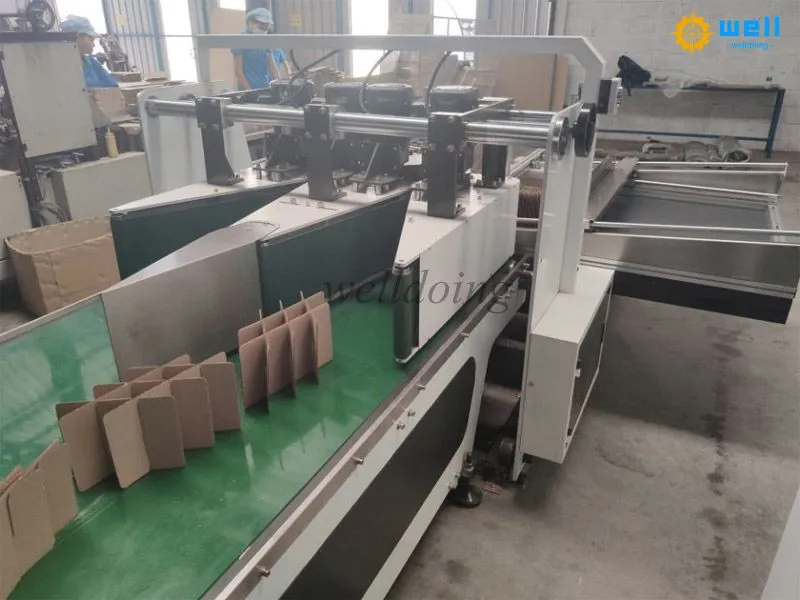
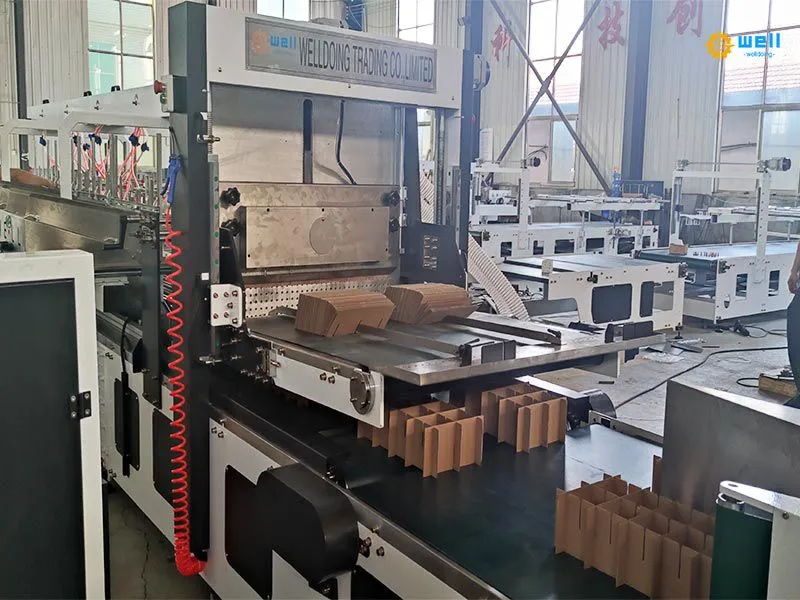
A fully automatic partition assembler changes this workflow from start to finish. It handles automatic feeding, cross interlocking, forming and discharging in one continuous cycle. Servo-controlled positioning locks every partition with identical tightness and precise cell dimensions, batch after batch. There is no longer variation between one operator’s work and the next. Reject rates drop sharply, corrugated waste reduces, and finished partitions meet strict repeatability requirements for high-end brand packaging.
1. Cut Labour Dependency & Lower Long-Term Production Costs
Labour shortage is one of the biggest drivers behind this upgrade. Manual partition assembly needs dedicated teams. The automatic partition assembler cuts required operators dramatically. One machine can run with minimal supervision, freeing experienced workers to move to higher-value jobs such as die-cutting, quality inspection, order planning or customer support.
While the machine requires upfront capital investment, most corrugated converters see clear payback within a reasonable timeline. You eliminate recurring overtime costs, reduce recruitment pressure and avoid productivity dips caused by staff leave or turnover. For converters running steady partition orders, labour savings are usually the first measurable win after installation.
2. Boost Throughput & Meet Tight Delivery Deadlines
Hand assembly hits a hard speed limit. Output drops when workers tire, and scaling capacity means hiring and training more people — which is slow and unpredictable.
Fully automatic partition assemblers run continuously at stable speeds, far outpacing manual output. The machine keeps pace with high-speed folder gluers, case packing lines and converting workflows. When customers push for shorter lead times or rush seasonal orders, your plant can ramp up partition output without scrambling to find temporary staff. This directly improves on-time delivery and helps you win larger volume contracts that you could not support manually.
3. Consistent Partition Quality to Protect Your Customer Relationships
Brands that ship glass, bottles, electronics and fragile goods depend on corrugated partitions to prevent transit damage. A partition that is too loose shifts in the carton; one that is too tight is hard to insert and may crack during packing.
Servo-driven automatic assembly ensures uniform slot depth, consistent interlock and accurate cell geometry across every grid. Every partition fits the carton correctly. Fewer defective partitions mean fewer complaints, fewer returned batches and stronger trust with your packaging buyers. For corrugated converters competing on quality, this consistency becomes a powerful selling point you can highlight in quotations and customer audits.
4. Fast Changeover for Mixed SKU Production
Modern corrugated shops rarely run one partition size all day. Most jobs involve mixed cell layouts, different board grades and frequent size changes for different customers.
Top-tier fully automatic partition assemblers support quick recipe changeover. Operators select pre-saved programs for different grid patterns, dimensions and board thicknesses, with minimal tooling adjustment. This versatility makes the machine suitable for both high-volume repeat orders and smaller, mixed-run jobs. Instead of dedicating separate manual teams to each partition style, one machine handles your whole partition product portfolio efficiently.
5. Safer, More Ergonomic Shop Floor
Manual partition assembly is repetitive work. Constant bending, pushing and interlocking cardboard strips increase the risk of repetitive strain injuries. Turnover stays high because workers do not want to stay in this role long term.
Automation removes the heavy, repetitive manual task from your production line. Your team avoids ergonomic stress, workplace fatigue and the risk of hand injuries from sharp slotted board. A safer working environment lowers accident risk and improves overall shop morale.
Who Should Consider This Upgrade?
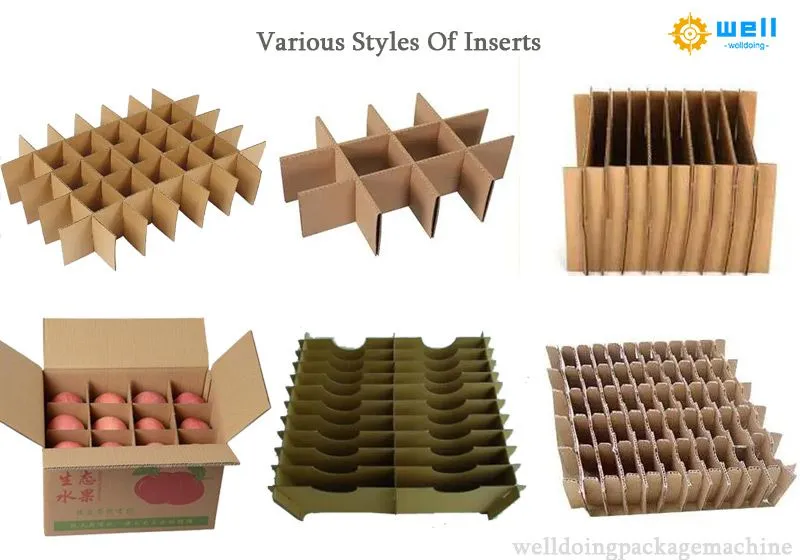
The fully automatic partition assembler is a strong fit for corrugated converters that regularly produce carton dividers, bottle grids, multi-cell partitions and protective inner inserts. It works well for plants serving beverage, glass, homeware, electronics, agricultural and e-commerce packaging markets.
It is especially worth evaluating if you notice these signs:
Partition assembly is your production bottleneck
Labour costs and turnover keep rising
Customers reject batches due to inconsistent partition fit
You struggle to scale output during peak order seasons
You want to integrate partition making into an automated end-of-line workflow
Final Thoughts
Corrugated converting is moving toward lean, predictable automation. The shift to a fully automatic partition assembler is not just about replacing hands. It is about replacing an unstable, labour-heavy process with controlled, repeatable production that protects your margins and your customer base.
Converters that adopt this machine gain three core advantages: lower labour exposure, higher reliable throughput and quality consistency that manual assembly cannot match. In a competitive packaging market, these advantages separate growing, profitable box plants from those stuck fighting labour shortages and quality headaches.
If your partition station is holding your converting line back, it may be time to review whether a fully automatic partition assembler is the right next automation step for your factory.
Recently Posted
-
How To Cut Makeready Time On Semi-Automatic Carton Printer Slotter Die Cutter
November 23, 2026Corrugated carton converters running semi-automatic printer slotter die cutters know this pain well: slow makeready kills producti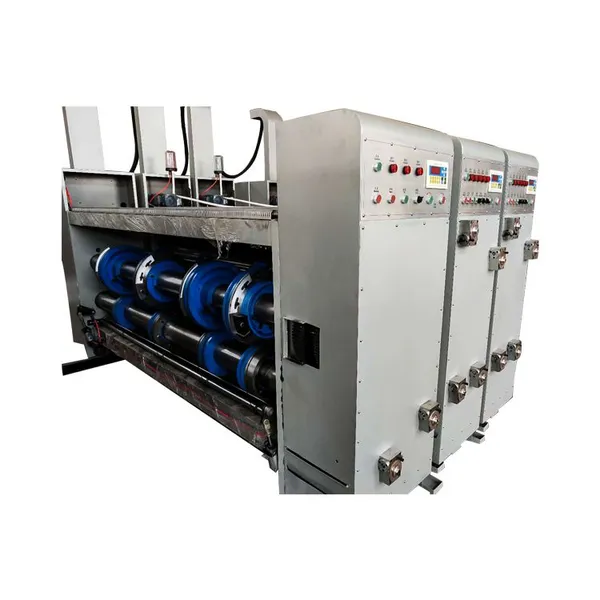 Read More
-
Automatic Paper Angle Board Machine: A Complete Solution for Eco-Friendly Edge Protector Production
November 20, 2026Global supply chains are shifting toward sustainable, damage-free packaging solutions, and paper angle boards (also known as paper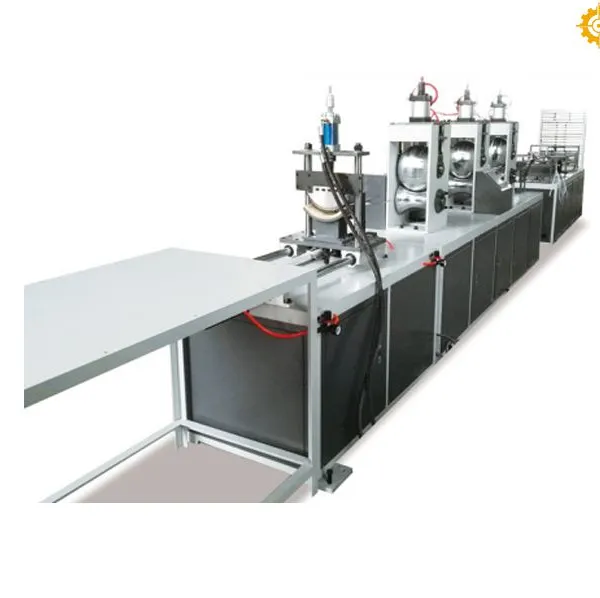 Read More
-
How Composite Hardboard Is Made | Full Automatic Hardboard Production Line
November 19, 2026Composite hardboard, also widely known as multi-ply grey hardboard, is a rigid, flat, high-density board formed by laminating mult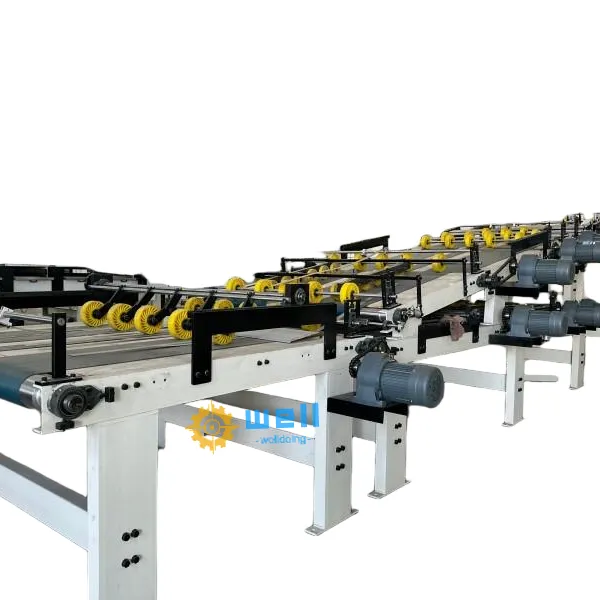 Read More
-
How Paper Edge Protector Machine Reduces Pallet Cargo Damage In Export Shipping
November 18, 2026For exporters, ocean freight and intermodal logistics carry hidden risks that can turn a profitable shipment into costly claims. P
Read More

Contact Us
Recommended Products
-
 Corrugated Printing Ink Sewage ProcessorUS$ 2000 - 20000MOQ: 1 Set
-
Ink Print Effluent Treatment EquipmentUS$ 2000 - 20000MOQ: 1 Set
-
Ink Sewage Treatment Unit for PrintingUS$ 2000 - 20000MOQ: 1 Set
-
Printing Ink Sewage Purification MachineUS$ 2000 - 20000MOQ: 1 Set
-
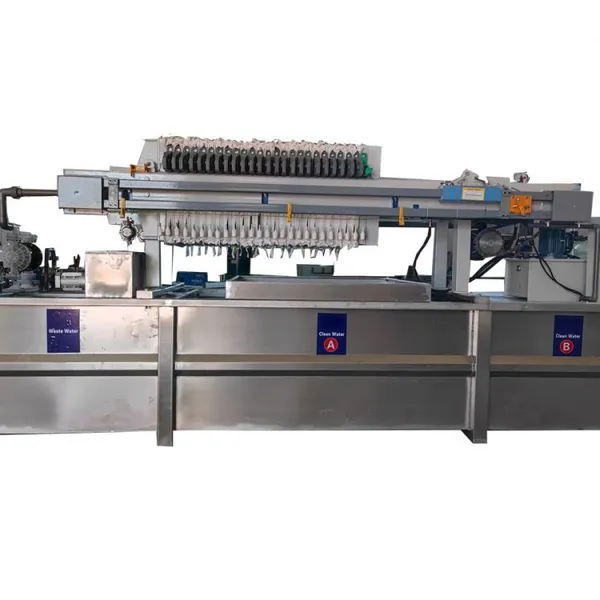
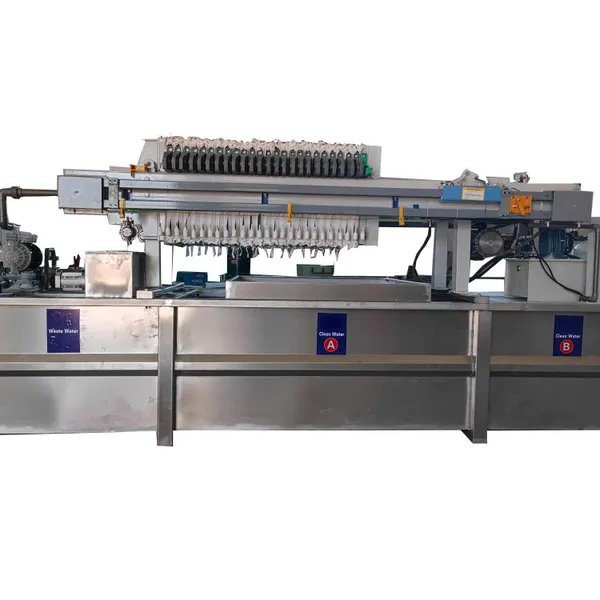
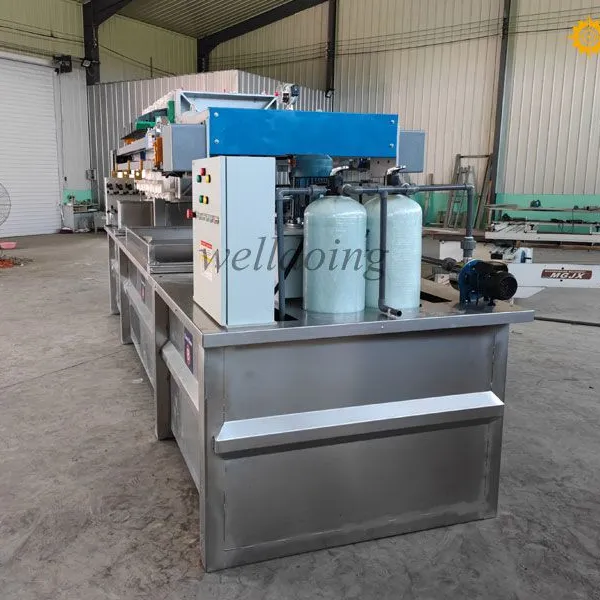
Ink Print Waste Water Treatment MachineUS$ 2000 - 20000MOQ: 1 Set
-
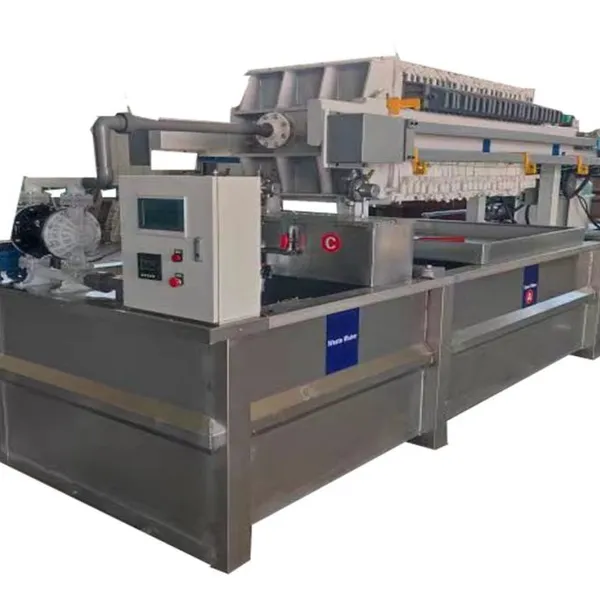
Printing Ink Sewage Treatment SystemUS$ 2000 - 20000MOQ: 1 Set
-
Ink Printing Sewage Treatment MachineUS$ 2000 - 20000MOQ: 1 Set
-
Semi Auto Corrugated Box Printer Die Cutter SlotterUS$ 5000 - 100000MOQ: 1 Set
-
Carton Semi-Automatic Printing Slotting Die CutterUS$ 5000 - 100000MOQ: 1 Set
-
Semi-Automatic Corrugated Carton Printer SlotterUS$ 5000 - 100000MOQ: 1 Set
-
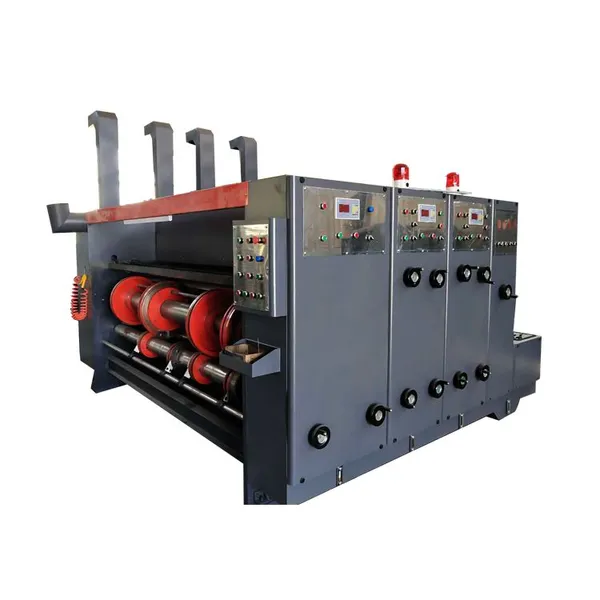
Semi Auto Carton Box Printer Die Cutter SlotterUS$ 5000 - 100000MOQ: 1 Set
-
Semi-Automatic Printer Slotter Die Cutter for CartonsUS$ 5000 - 100000MOQ: 1 Set
-
Semi Auto Carton Printing Slotting Die Cutting MachineUS$ 5000 - 100000MOQ: 1 Set
-
Semi-Automatic Carton Printer Slotter Die CutterUS$ 5000 - 100000MOQ: 1 Set
-
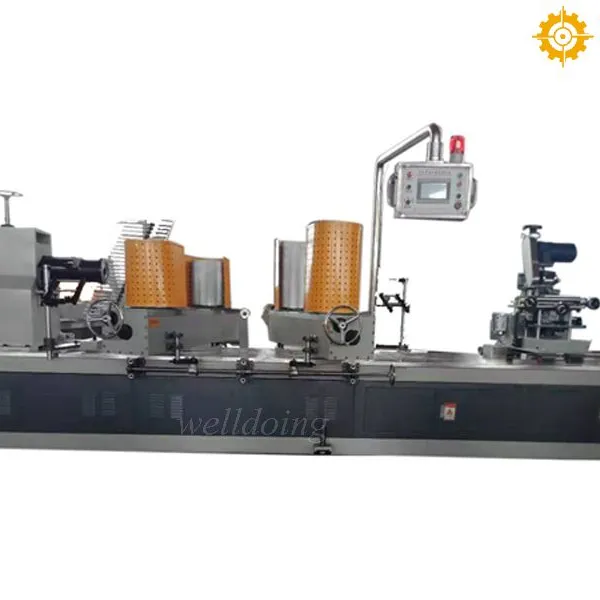
Packaging Paper Tube Making MachineUS$ 5000 - 30000MOQ: 1 Set
-
Servo Paper Tube Winding MachineUS$ 5000 - 30000MOQ: 1 Set
-
Multi-layer Paper Tube Making MachineUS$ 5000 - 30000MOQ: 1 Set
-
Efficient Paper Tube Forming MachineUS$ 5000 - 30000MOQ: 1 Set
-
Automatic Paper Core Tube MachineUS$ 5000 - 30000MOQ: 1 Set
-
Industrial Paper Tube Production MachineUS$ 5000 - 30000MOQ: 1 Set